10 Years of Powertrain Coverage: What Mitsubishi’s Warranty Includes on a 2026 Outlander PHEV
Buying a plug-in hybrid means asking different questions than you would for a gas SUV. The battery, the electric motors,...


British Columbia drivers face unique winter challenges—from coastal rain and black ice in Victoria to sudden snowfall on the Malahat Highway. When traction disappears and roads turn treacherous, your vehicle's all-wheel drive system becomes your most critical safety feature. Mitsubishi's Super All-Wheel Control (S-AWC) stands out as one of the most sophisticated AWD systems available, engineered from decades of rally racing experience to handle exactly these conditions.
Unlike conventional all-wheel drive systems that simply split power between axles, S-AWC integrates multiple technologies to control each wheel independently. This rally-bred system continuously monitors road conditions and driver inputs, adjusting power delivery, braking force, and torque distribution in real time. For Victoria drivers navigating wet winter mornings or weekend trips to Mount Washington, this translates to measurably better control, stability, and confidence.
Super All-Wheel Control represents Mitsubishi Motors' patented approach to all-wheel drive, developed through 12 Dakar Rally victories and World Rally Championship success. The system integrates four core technologies that work together seamlessly:
Four-Wheel Drive (4WD) directs torque between front and rear axles when wheel slippage is detected, maximizing overall traction. This proves particularly valuable when accelerating from a stop on slippery surfaces or climbing hills covered in ice or snow—common scenarios on Vancouver Island's varied terrain.
Active Stability Control (ASC) reduces engine power and applies brakes independently to wheels with less traction. This prevents the need for oversteering when accelerating on slippery or uneven surfaces, maintaining your intended path through corners even when conditions deteriorate mid-turn.
Anti-Lock Braking System (ABS) prevents wheels from locking under heavy braking or while stopping on slippery road surfaces. The wheels continue turning, providing greater control during emergency stops—critical when encountering unexpected ice patches on Highway 1.
Active Yaw Control (AYC) manages left-to-right driving and brake forces through torque vectoring technology. By applying braking at each individual wheel as required, the system keeps the vehicle comfortable and true to your intended path on slippery curves, icy roads, and uneven terrain.
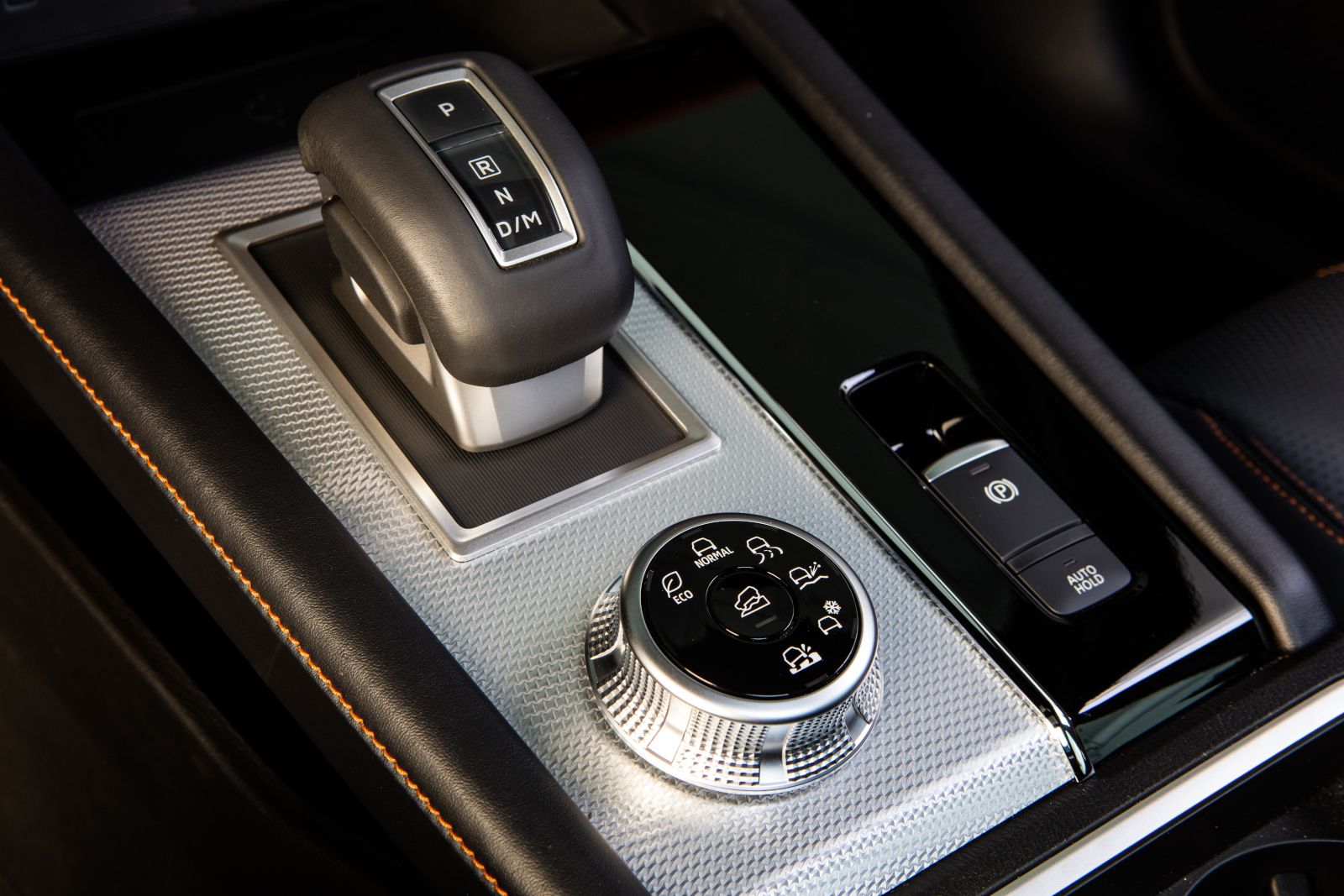
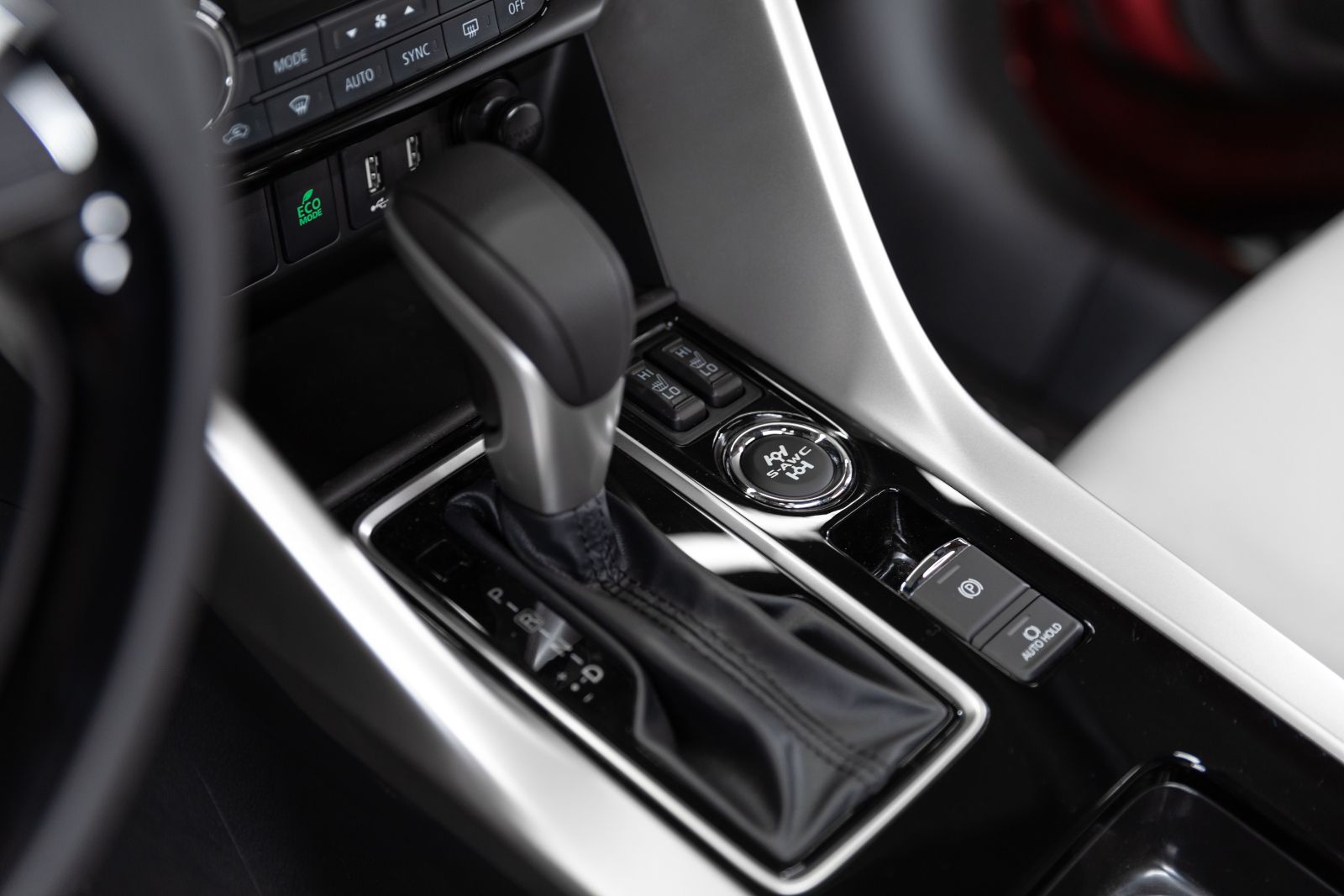
S-AWC offers multiple selectable drive modes, accessible through a simple dial or button interface. Each mode optimizes the system's response for specific road conditions:
NORMAL Mode delivers well-balanced all-wheel drive dynamics across various conditions. This mode enhances fuel efficiency while maintaining traction, high-speed stability, and predictable handling—ideal for daily Victoria commuting and highway driving to Nanaimo or the ferry terminals.
SNOW Mode provides improved traction and stability specifically calibrated for light to medium snow-covered or slippery roads. When winter weather arrives in Greater Victoria or you're heading up-island, this mode adjusts throttle response and power distribution to prevent wheel spin and maintain forward momentum.
GRAVEL Mode (available on Outlander and Eclipse Cross) delivers maximum traction on coarser roads or rough off-road terrain. Whether exploring backroads around Sooke or navigating unpaved forest service roads, this mode optimizes grip on loose surfaces.
MUD Mode (Outlander only) enhances performance when driving through muddy conditions or deep snow, especially when accelerating or turning from a stopped position. This proves valuable for British Columbia drivers who venture beyond paved roads during shoulder seasons.
ECO Mode improves the efficiency of the gasoline engine and S-AWC system to support fuel-efficient driving. During dry conditions on Highway 17 or Trans-Canada routes, this mode reduces fuel consumption without sacrificing safety.
TARMAC Mode (Outlander only) provides enhanced agility and heightened performance on dry, paved roads, sharpening responsiveness for spirited driving when conditions allow.
|
Technology |
Function |
Winter Benefit |
|
4WD Torque Distribution |
Directs power between front/rear axles based on wheel slip |
Maintains momentum on icy hills and snow-covered roads |
|
Active Stability Control (ASC) |
Reduces power and applies individual wheel braking |
Prevents oversteering on slippery corners |
|
Active Yaw Control (AYC) |
Manages left-right torque through individual wheel braking |
Keeps vehicle on intended path through curves |
|
Anti-Lock Braking (ABS) |
Prevents wheel lockup during heavy braking |
Maintains steering control during emergency stops |
Victoria's winter climate presents distinct challenges: frequent rain creating slick roads, occasional snow events, and the ever-present threat of black ice during temperature fluctuations. S-AWC addresses these conditions through continuous adaptation.
When sensors detect wheel slippage—whether from standing water on Government Street or ice forming on the Pat Bay Highway overnight—the system responds within milliseconds. Power shifts away from slipping wheels toward those with better grip. Simultaneously, individual wheel braking prevents the vehicle from deviating from your intended path.
This integration proves particularly valuable during mixed-condition driving. A morning commute might start on wet pavement in downtown Victoria, transition to icy patches crossing the Malahat, and end on snow-dusted roads in Duncan. S-AWC adapts to each surface automatically in NORMAL mode, or you can manually select SNOW mode for maximum winter optimization.
The system's rally heritage becomes evident in dynamic situations. When navigating a slippery curve—common on Highway 14 toward Sooke—AYC applies subtle braking to individual wheels, helping the vehicle track your intended line rather than pushing wide or sliding. This torque vectoring technology provides control that conventional AWD systems cannot match.
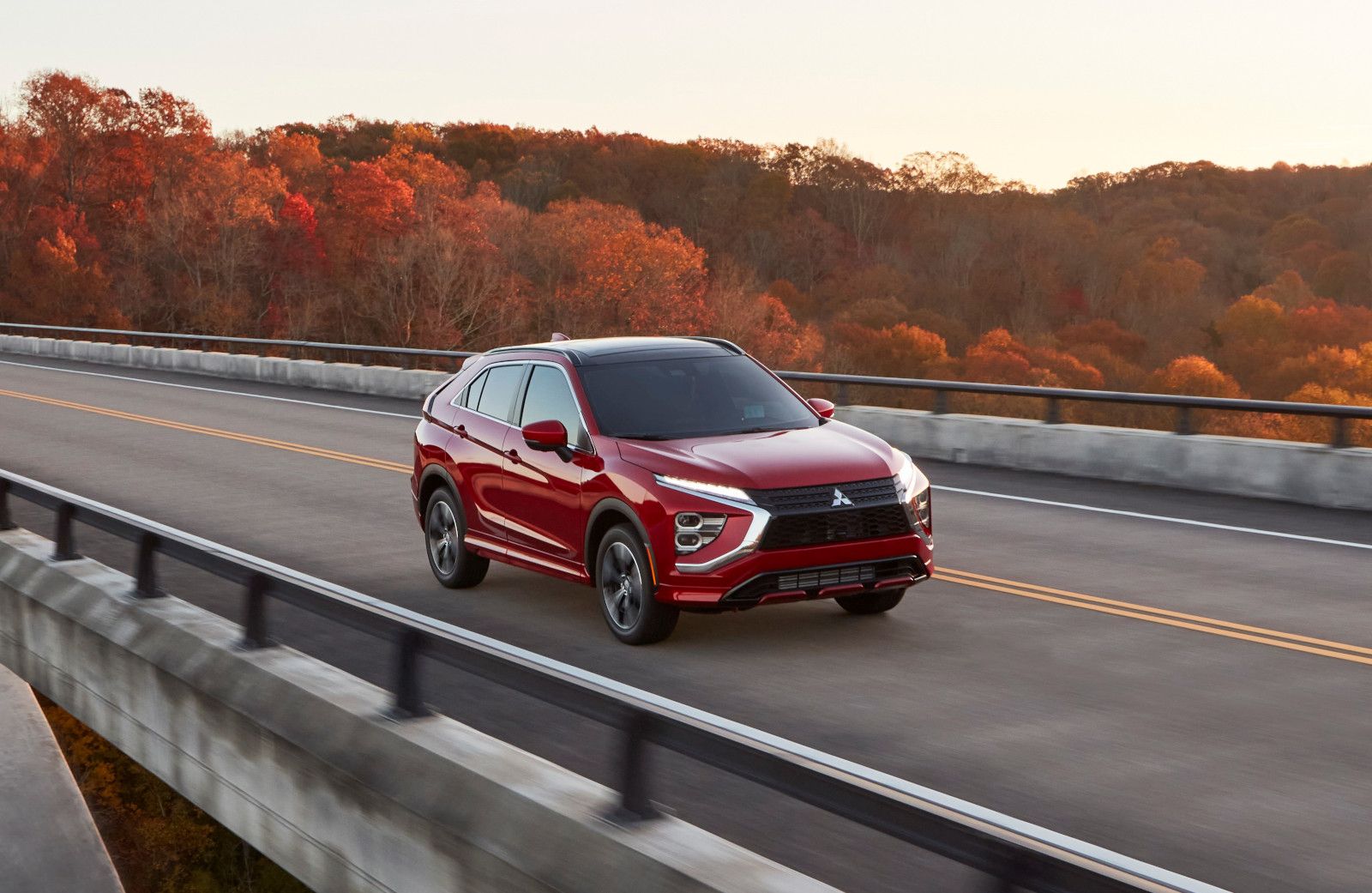
Most mainstream AWD systems operate reactively, engaging rear wheels only after front wheel slip is detected. This creates a delay between traction loss and system response. S-AWC's integration of multiple technologies working simultaneously eliminates this lag.
The system continuously monitors data from multiple sensors—wheel speed, steering angle, throttle position, yaw rate—and preemptively adjusts power delivery and braking. Rather than reacting to wheel slip, S-AWC anticipates and prevents it.
For British Columbia drivers, this translates to measurably better performance in three critical areas:
Acceleration on slippery surfaces: S-AWC maintains forward momentum without wheel spin, particularly valuable when pulling away from traffic lights on rain-slicked roads or starting uphill on snow.
Cornering stability: The system keeps the vehicle tracking your intended path through curves, even when surface conditions vary mid-corner—a frequent occurrence on Vancouver Island's winding coastal routes.
Braking control: Individual wheel braking and ABS integration provide shorter stopping distances and maintained steering control during emergency stops on compromised surfaces.
S-AWC comes standard on multiple Mitsubishi models available at Victoria Mitsubishi:
2026 Mitsubishi Outlander: All trims from ES S-AWC through GT Premium feature the full six-mode S-AWC system (ECO, NORMAL, TARMAC, GRAVEL, SNOW, MUD). The three-row SUV combines family-friendly space with advanced winter capability.
2026 Mitsubishi Outlander PHEV: Integrates S-AWC with plug-in hybrid technology, using twin electric motors for instant torque delivery. The system includes POWER mode for enhanced acceleration alongside standard drive modes.
2026 Mitsubishi Eclipse Cross: Standard S-AWC with three modes (NORMAL, SNOW, GRAVEL) provides compact crossover versatility with proven winter traction.
2026 Mitsubishi RVR: Features All-Wheel Control (AWC)—Mitsubishi's foundational AWD technology—on all trims except the base ES FWD. While not the full S-AWC system, AWC still provides selectable 2WD, 4WD AUTO, and 4WD LOCK modes for enhanced capability.
All S-AWC-equipped vehicles pair the system with Continuously Variable Transmission (CVT) for smooth power delivery and available paddle shifters for manual control when desired.
Super All-Wheel Control brings decades of motorsport engineering to tackle daily driving challenges. For Victoria drivers facing British Columbia's unpredictable winter conditions, the system delivers measurable advantages in safety, control, and confidence.
Whether navigating rain-slicked morning commutes, weekend trips to Mount Washington, or exploring Vancouver Island's backroads, S-AWC adapts to conditions continuously. The technology works transparently, requiring no special expertise—simply select your preferred drive mode and drive as intended.
Discover how S-AWC performs in real-world British Columbia conditions at Victoria Mitsubishi. Schedule a test drive to experience the system's capabilities firsthand on local roads.
Buying a plug-in hybrid means asking different questions than you would for a gas SUV. The battery, the electric motors,...
A touchscreen is only useful if it does what you need without a fight. British Columbia’s mix of highway commutes, ferry...

Loading a boat or personal watercraft trailer for a weekend on the water is a familiar summer routine across British...